
Low cost power
Southeast Alaska's hydroelectric power grid
By Minh-Thu Vo
As residents of Ketchikan, Alaska, many of us know the frustration that comes with living in one of the rainiest cities in the United States that receives an annual average of 160 inches of rainfall. While the constant downpours can be a nuisance, southeast Alaska’s unique climate allows for enough rainfall to provide communities with affordable and renewable hydroelectric power as their main source of electricity.
Southeast Alaska Power Agency (SEAPA) is a nonprofit organization that works as the largest hydroelectric power supplier within the microgrid which encompasses the communities of Ketchikan, Wrangell, and Petersburg. The people of SEAPA work tirelessly with other public utilities such as Ketchikan Public Utilities (KPU), Wrangell Municipal Light and Power (WMLP), and Petersburg Municipal Power and Light (PMPL) to form a joint action agency that provides affordable and reliable electricity to the communities of southeast Alaska.
Management of Valuable Assets that provide Hydroelectric power
SEAPA is an organization with around 18 employees who work together to manage its capital assets. The organization is governed by a board of directors that is selected by each community, and these directors appointed Robert Siedman as the company's chief executive officer (CEO) in charge of these personnel and capital assets.
CEO, and former Senior engineer at SEAPA, Robert Siedman, explained that managing the assets of the company can be difficult due to the high demand of electricity, but their dedicated team of talented workers allows things to run smoothly by prioritizing reliability and minimizing failures.
“It can be challenging to manage that many assets, but we’ve got a great team and it’s very well organized. We stay ahead of failures, so our failure rate is very low, which means our reliability is very high.”
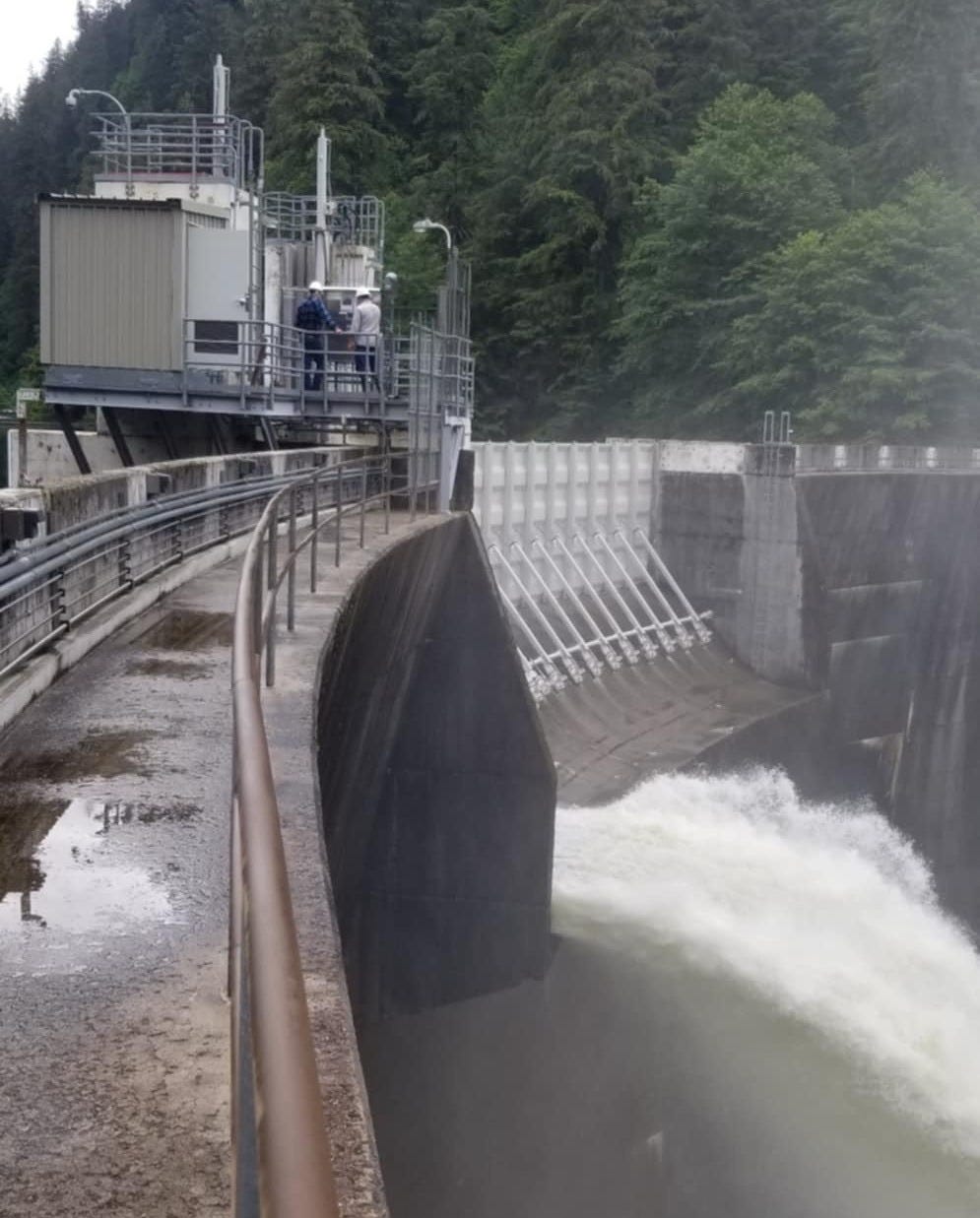
SEAPA owns and operates Swan Lake, Tyee Lake, and the SEAPA grid that includes the Swan-Tyee Intertie, which are three of the major capital assets that allows them to supply power to local utilities. The Swan Lake power plant has a total output of around 24 megawatts, which supplies 50-60% Ketchikan’s electrical demand. Tyee Lank power plant also has a total output of around 24 megawatts and supplies 100% of Wrangell’s electricity and 80-90% of Petersburg’s electricity. The Swan-Tyee Intertie is the grid that ties the power plants together. This grid consists of a line between the two power plants, as well as several miles of above ground transmission lines and even submarine cables to supply electricity to island communities.
Siedman explained what compelled him to come work for SEAPA after previously working for the U.S. Army Corps of Engineers at the hydroelectric design center, where he was the chief of power systems.
“I moved up to Alaska because of the uniqueness of the powergrid in the southeast. SEAPA owns, opererates, manages the water, manages the outputs from each facility, and has an excellent capital improvement program. I came to the agency because it is a microgrid that is 100% hydroelectric.”
Being 100% hydroelectric provides challenges in management of water in the lakes between all members of the joint action agency. SEAPA sells the power at a wholesale rate to public utilities like KPU at 7.3 cents per kilowatt hour (kwh) which is later sold to the people at 12.19 cents per kwh. This is considered quite low compared to Alaska’s state average of 24.42 cents per kwh. To put this in perspective, the average household uses 899 kwh per month, and by paying only 12.19 cents per kwh, Ketchikan residents only have to pay half as much as the average Alaskan for electricity.
Siedman explained how SEAPA is able to supply communities with low cost affordable electricity due to their status as a nonprofit organization.
“Since we are a nonprofit agency, we set our rates on just the cost of doing business, without any profits of that nature, we have the lowest cost of electrical rates in the state of Alaska, lower electric rates than your national average.”
If either Tyee or Swan Lake ran out of water, that inevitably means that the public utilities would have to burn costly diesel fuel as a source of energy. In the event this happens, people’s bills would skyrocket. Therefore, managing the lakes and infrastructure properly is one of the biggest challenges that SEAPA faces.
Future Projects for Sustainable Power Generation
With communities constantly growing, there is a constant need for more power. SEAPA currently has plans to build a third turbine at its Tyee lake facility that will increase horsepower output for the SEAPA grid allowing for future expansion and minimized supplemental diesel runs.
Siedman talked about how the Tyee lake third turbine will allow SEAPA to meet the firm power demands of the community in the winter months, as well as meet the demands of future expansion in the communities.
“When the Tyee Lake third turbine is built it will effectively increase the horsepower of Tyee lake by 50% and effectively increase SEAPA’s total horsepower by 25%.”
Siedman has played a crucial role in securing the funding and licensing needed for the Tyee third turbine project by meeting with state senators, representatives, and other members of the Department of Energy. One of the recent successes toward the project that Siedman mentioned was the awarding of funding by the Department of Energy.
“We recently received an award which is pending negotiation for $5 million from the Department of Energy. That $5 million is for the Tyee third turbine project that will increase the horsepower at that facility.”
This will be an excellent asset to SEAPA as well as the rest of the joint action committee.
Operations and Maintenance
If there was a core to the SEAPA grid it would be Tyee lake and Swan lake which are currently equal in horsepower as well as being the two largest powerhouses in the microgrid. Making sure that they are maintained and operated properly is paramount. Doing so is not easy, as both plants are operating in remote locations that are only accessible by boat or plane. Being in a remote location requires an operator to be onsite at all times to operate and maintain the plant facilities.
Swan Lake
John Stanley, Lead Operator Electrician for Swan lake hydroelectric facility for the past 6 years, talked about how he and his partner work together to maintain the plants and ensure their constant reliability.
“The plant’s are manned 24/7 with an operator electrician and an operator mechanic working together to solve problems in their respective fields. We have to be prepared to fix any issues we face by ourselves, since we’re usually the only two people working at the plant at one time.”
He explained that each plant has two teams consisting of an electrician and a mechanic that rotate one week on and one week off in order to maintain a constant presence to maintain reliability. These operators work alongside SEAPA management, engineers, and contract labor in order to bring the communities of Ketchikan, Wrangell, and Petersburg low cost and reliable power.
Stanley talked about the positive aspects of his job and the benefits that come with working for SEAPA.
“Working for SEAPA is unique in the way it's structured. I like that it's a small group of people that currently make up a good team that always seems to get the job taken care of. On top of that, it's also great to be part of an organization that has a vision for the future.”
Stanley also mentioned some of the negative aspects of his job that make it challenging to work out at Swan Lake. Stanley talked about the loneliness that comes with a job that requires you to be isolated for long periods of time.
“Working away from home is probably the biggest challenge. You miss out on a lot of holidays and important events that you would have with your family. I used to consider myself a loner, but even I can get pretty lonely out here.” Said Stanley.
Stanley views these downsides as a worthy sacrifice if it means being able to reliably provide for his family and contribute to the community.
Tyee Lake
Ashley Goyne, Operator Electrician at Tyee Lake hydroelectric plant for the past 2 years, has come to love the off-grid aspect of the job. He explained how there is always something new to do every day, and the job is unlike any other job he's worked for before.
“It's a very unique job and we have so much freedom to do what we want out here.” Said Goyne. “It’s just like paradise for me, it's right where I wanna be. All you gotta do is just stop and look because every view is a picture out of national geographic, it's just so beautiful here.”
The uniqueness and freedom of the job and the picturesque landscapes have stolen Goyne’s heart, however, he also mentions some of the concerns a person may face being so far removed from civilization.
“Being in the middle of nowhere is a concern because if we get hurt we have to be flown out, and if the weather’s bad, which it always is, fog can roll and we can’t get a plane or a boat out here.”
Despite these challenges, both Stanley and Goyne find fulfillment in their work, knowing that they are helping provide a crucial service to their communities.
Overall, SEAPA is an incredible organization that provides communities in Alaska with reliable, low-cost, renewable energy that employs people with high-paying and fulfilling jobs. SEAPA stands as a model of sustainability and cost-effectiveness in an often challenging environment. So, the next time you hear someone complain about the rain, remind them that SEAPA uses that very water to provide affordable hydroelectric power to the communities in Southeast Alaska.